The Compute Concentration Test: What Anthropic's $200B Google Deal Means for Your Business
Two companies just bought half the cloud.
That is not hyperbole.
This week, Anthropic committed roughly $200 billion to Google Cloud over the next five years, according to a report from The Information confirmed by Reuters and Yahoo Finance.
That single deal represents more than 40% of Google Cloud's disclosed revenue backlog, per analysis from SemiWiki.
Stack that on top of OpenAI's existing megadeals with Microsoft and Oracle, and the picture gets stranger.
Two AI labs now account for roughly half of nearly $2 trillion in total forward revenue committed at AWS, Microsoft, and Google combined, again per SemiWiki's industry concentration analysis.
You and I are sharing a cloud with two roommates who pay 50% of the rent.
Here is the truth.
If you run a business, this is not just an interesting tech headline. It changes how you should think about pricing, vendor risk, and the tools you build your company on for the next five years.
Let me show you why.
What Exactly Did Anthropic Just Buy?
Anthropic's deal with Google has three layers.
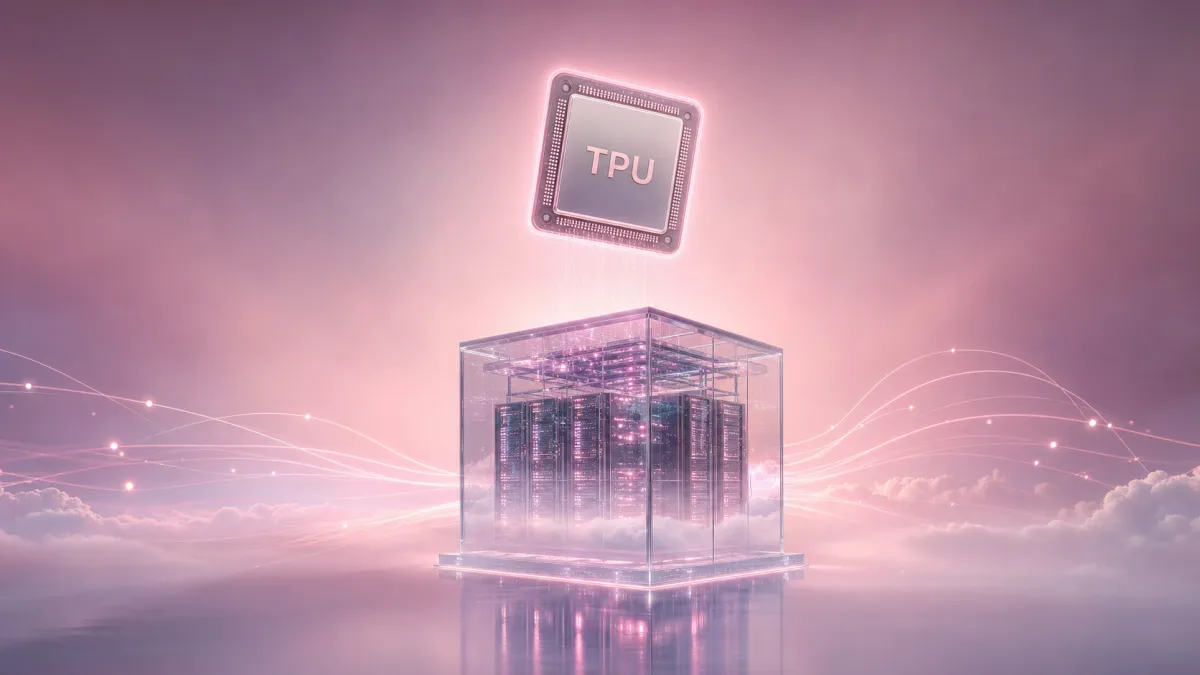
Layer one: chips. Anthropic gets access to up to 1 million Google TPUs, with over 1 gigawatt of capacity coming online in 2026 per Anthropic's own announcement.
Layer two: cloud. That compute runs on Google Cloud infrastructure, billed under the new five-year, ~$200 billion commitment per The Information's reporting.
Layer three: capacity expansion. Tom's Hardware reports that the original April Broadcom partnership has now expanded to 3.5 gigawatts of TPU capacity starting in 2027, with Broadcom doing the implementation work for Google's chip designs.
Mizuho analysts estimate Broadcom alone will pull $21 billion in 2026 and $42 billion in 2027 from the Anthropic build-out, according to coverage in Engadget.
And here is the part most headlines missed.
AWS is still Anthropic's primary cloud provider. Project Rainier, the Trainium 2 supercluster in Indiana, remains the lead training environment, as Seeking Alpha confirmed.
So Anthropic now runs on three stacks at once.
AWS Trainium for the primary training. Google TPUs for diversification and inference. Nvidia GPUs sprinkled in for specific workloads.
That is not a vendor decision. That is a survival strategy.
Why Are The AI Labs Buying Compute Like This?
Because compute is now the moat.
Not the model. Not the talent. Not even the data.
The compute itself.
Air Street Capital's State of AI report from May 2026 lays it out plainly. The labs that win the next 24 months will be the ones with locked-in physical infrastructure, because new chip and power capacity simply cannot be conjured out of thin air.
Anthropic announced a $50 billion American infrastructure pledge in November 2025, but most of that money does not turn into operational data centers until 2027 and beyond.
So the labs are doing what every smart business should do when supply is constrained.
They are buying ahead.
They are pre-paying for years of capacity at locked-in prices, and they are spreading their bets across multiple hyperscalers so no single outage, regulatory action, or pricing change can take them down.
What Does This Mean For Small And Mid-Sized Businesses?
Here is where most operators stop reading.
"I don't run an AI lab. Why does this matter to me?"
It matters because you almost certainly use a tool that is built on top of Anthropic, OpenAI, or Google's models.
Your CRM is using Claude or GPT under the hood. Your customer support tool. Your email assistant. Your content platform. Your video editor. Your bookkeeper. Your code.
When two companies control 50% of the cloud backlog, three things happen to you and me.
One: your tool prices follow their tool prices.
When Anthropic and OpenAI raise inference costs, every SaaS app built on them either eats the margin hit or passes it through. Most pass it through.
Two: your tool reliability follows their cluster reliability.
When Google Cloud has a regional outage, half your AI stack hiccups at once.
Three: your data ends up in fewer hands.
Even if you trust Anthropic and OpenAI today, the surface area is smaller than it has ever been.
That is the new reality.
You are not just picking software anymore. You are picking which two compute landlords you rent from.
Introducing The Compute Concentration Test
To help you think clearly about this, I want to give you a simple framework I call The Compute Concentration Test.
It has three questions.
Run every important AI tool in your business through these three questions before you renew, expand, or sign a new contract.
Question 1: Whose compute is this tool actually running on?
Most SaaS tools will not advertise this. You may have to dig into their security or trust pages, or just ask their sales rep directly.
If the honest answer is "100% on a single hyperscaler running a single foundation model," that is a concentration risk.
If the answer is "we route across at least two model providers and have failover plans," that is a healthier vendor.
Question 2: What happens to my workflow if this tool's primary model provider has a 12-hour outage?
If the answer is "everything stops," you have built a brittle business.
If the answer is "we degrade gracefully" or "we have a manual fallback," you are resilient.
This is the kind of question that used to apply only to airlines and banks.
In 2026, it applies to your e-commerce store, your coaching practice, and your agency.
Question 3: If my pricing tool's underlying inference cost doubles in 12 months, can I still hit my margin targets?
I built a small spreadsheet for our team where we model exactly this.
We assume a 1.5x and a 2x increase in our AI vendor costs and ask whether our offer still holds together.
Most operators have never run that math.
If you cannot answer this question with a yes, you have a pricing problem hiding inside what looks like a tool problem.
Why The Diversification Pattern Is The Real Lesson
Look at what Anthropic just did.
They did not pick AWS or Google. They picked AWS, Google, and Nvidia.
That is the move smart businesses copy.
The question is not "which AI tool is best." The question is "what is my second tool if my first one breaks?"
Most founders I work with run a single AI assistant for everything. One LLM-powered CRM. One LLM-powered email tool. One LLM-powered editor.
When that vendor has a bad week, their week is bad too.
The fix is not complicated.
It is to standardize on at least one tool per category that uses a different underlying model than your primary.
If your main writing tool is built on Claude, your backup should be built on GPT or Gemini.
If your main support bot runs on OpenAI, your secondary should run on Anthropic or open-source Llama.
This is not paranoia. It is the same logic Anthropic just spent $200 billion to apply at the cloud layer.
How To Run The Compute Concentration Test This Week
You do not need to redesign your tech stack today.
You need to do four things in the next seven days.
Step one: list every AI tool your business depends on.
Not just the AI products you bought intentionally. Include the ones that are quietly inside your CRM, your support desk, and your content tools.
You will be surprised how many there are.
Step two: write down which model each tool runs on.
This will take some research. If a tool refuses to disclose, that is data too.
Step three: count the concentration.
If more than 60% of your AI stack runs on a single model provider, you are over-exposed.
Step four: pick one tool to diversify in the next 30 days.
Pick the most business-critical one. Find an alternative on a different model provider. Run them in parallel for two weeks. Document the differences.
This is exactly the kind of strategic homework most founders skip until something breaks.
It is also the easiest 1% improvement you will make all year.
What This Tells Us About The Cloud Backlog Curve
There is a second-order pattern here worth naming.
Cloud providers have shifted from selling capacity month-to-month to selling decades of locked-in revenue to a tiny number of mega-customers.
Per the SemiWiki concentration analysis, the disclosed forward revenue at the big three hyperscalers now sits near $2 trillion, with Anthropic and OpenAI alone accounting for roughly half.
This is good news and bad news for operators.
The good news is that compute supply will keep expanding aggressively, because the hyperscalers have to build to honor those backlogs. New data centers, new substations, new fiber, new chip fabs.
The bad news is that the prices you and I pay are increasingly set by what those two anchor tenants negotiate.
When Anthropic locks in TPU pricing, your coaching app's bill goes along for the ride. When OpenAI raises prices, your agency's cost of goods follows.
This is what I am calling the Cloud Backlog Curve.
The further out you can see committed compute revenue, the less your individual SaaS price negotiation matters, and the more your survival depends on whether you have planned for a future where two tenants set the rules.
TL;DR
- Anthropic just committed roughly $200 billion to Google Cloud over five years per The Information, more than 40% of Google's cloud backlog.
- Combined with OpenAI's deals, two labs now account for about half of $2 trillion in forward cloud revenue per SemiWiki.
- Anthropic spreads compute across AWS Trainium, Google TPUs, and Nvidia GPUs, with 3.5GW of TPU capacity from 2027.
- For small and mid-size businesses, this means tool prices, reliability, and data exposure are increasingly set by two vendors.
- Run The Compute Concentration Test: audit your AI stack, count the model concentration, and diversify the most critical tool inside 30 days.
FAQ
Q: Does this mean Anthropic is leaving AWS?
No. AWS remains Anthropic's primary cloud provider for training, with the Trainium 2-powered Project Rainier in Indiana still running, per Seeking Alpha. The Google deal is additional capacity, not a replacement.
Q: How much TPU capacity is actually online today?
About 1 gigawatt is in production in 2026, with the deal scaling to 3.5 gigawatts starting in 2027 according to Tom's Hardware. The TPUs are designed by Google and implemented by Broadcom.
Q: Will my AI bills definitely go up because of this deal?
Probably yes, indirectly. Inference costs have been falling per token, but as compute concentration increases, so does the pricing power of the few labs that own the capacity. Air Street's State of AI May 2026 flags this concentration as a structural risk for downstream pricing.
Q: What is the simplest first step for a small business?
Make a list of every AI tool you pay for, write down which model each one is built on, and identify the most business-critical one. That single audit is the entire start of The Compute Concentration Test.
Q: Are open-source models a real alternative?
For some workloads, yes. Open-source models like Llama and Mistral can run on commodity hardware or smaller cloud regions and give you a true off-ramp from the two-lab concentration. They are not a fit for every workload, but they are worth testing as a hedge.
Your Next Move
You do not have $200 billion to spend on compute. You do not need it.
You need 60 minutes this week to audit your AI stack, run The Compute Concentration Test, and pick one tool to diversify before the end of the month.
If you want help thinking through which tools matter most, what to keep, what to swap, and how to build a resilient AI operating system for your business, book a free 1-on-1 AI Implementation Session.
Bring your tool list. We will run the test together.
Two companies just bought half the cloud.
Make sure your business is not at the mercy of either one.